
Puyallup, WA · Garage Door Service
Spring Repair for Waller's 1970s Garage Doors
Waller homes built around 1971 run different torsion hardware than the newer Puyallup stock. We carry both spring types on the truck for the 4-mile run out.
- Repairs & new doors
- Springs & openers
- Serving 6 nearby communities
The DIY Question
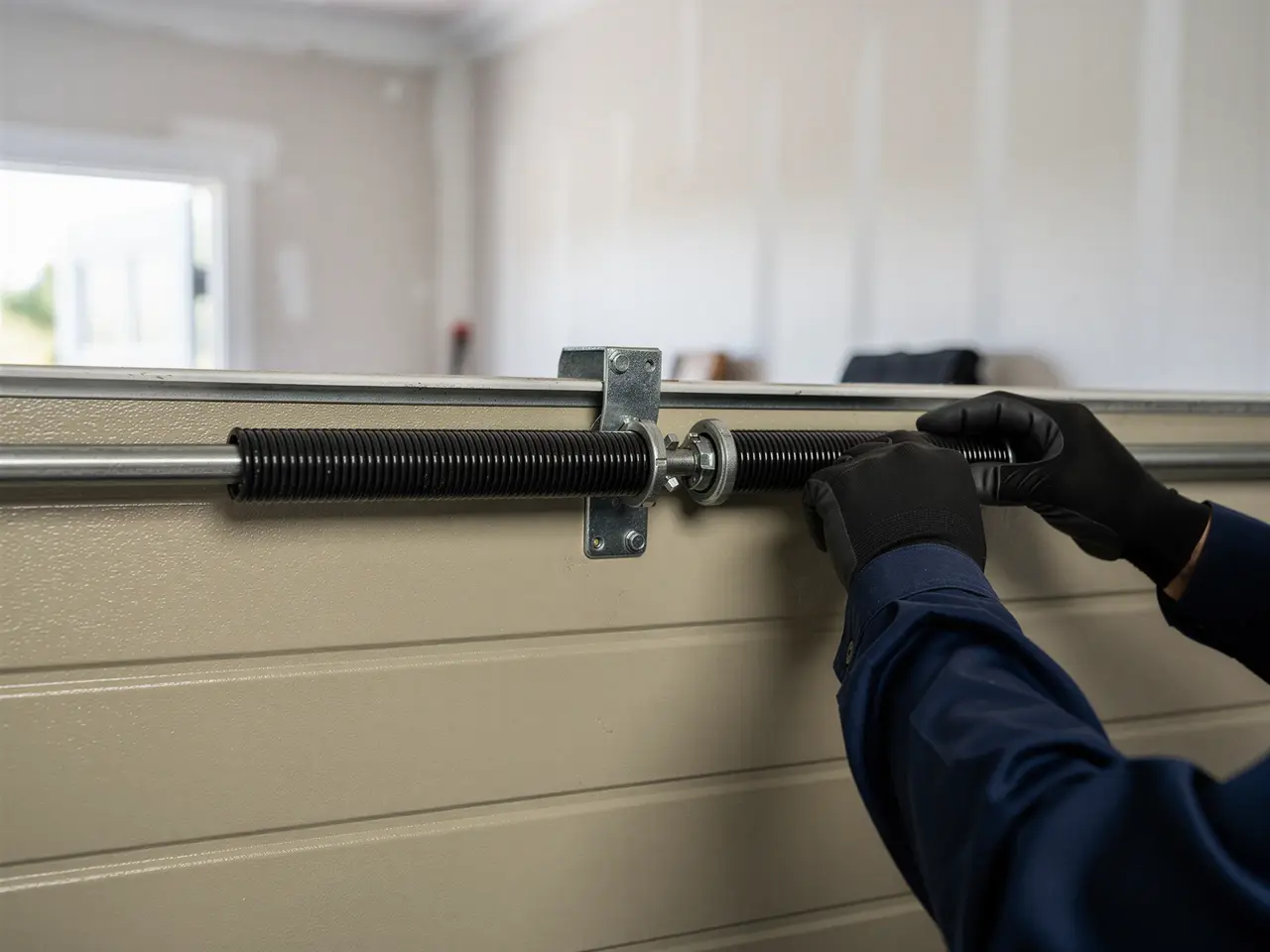
A broken torsion spring looks like a two-bolt job until you've got the winding bars in your hands and the door won't budge. It isn't a weight you can muscle - a standard torsion spring on a double door is wound tight enough to put someone in the ER if the bars slip. That's true everywhere, but it matters more in Waller because of what's actually on these houses.
Median year built here runs around 1971, noticeably older than the 1988 median across the wider Puyallup service area. That gap is the whole story. A house from 1971 is more likely to still have its original torsion tube, often a single spring on a double door instead of the two-spring setup that became standard later, and the mounting hardware on these older brackets wasn't built to the same tolerances as what you'd find going in today. If you're not sure which you've got, don't guess - that's the one place DIY on a garage door turns into a hospital trip instead of a Saturday project.
We'll tell you straight if it's a bolt-on fix or something that needs the whole assembly swapped. Sometimes it's cheaper to replace both springs even if only one broke, since the other is the same age and about to go anyway.
What Can Go Wrong
On a house from the early '70s, the spring itself is rarely the only thing that's tired. The galvanized coating on a spring that old has usually gone past its rated cycle count, and the stationary cone or center bracket holding it can be worn enough that a new spring on old hardware just fails again in a year. We also see bent torsion tubes on these older single-spring setups - when the one spring that's doing all the work finally snaps, the sudden drop can tweak the shaft.
The Puget Sound area's cold-moderate climate doesn't help. Winters here aren't brutal, but the swing between damp fall mornings and the occasional hard freeze puts steady stress-cycling on metal that's already 50 years old. That's a slower failure than a dramatic snap - usually it shows up as a spring that's visibly stretched, a door that's gotten heavier to lift by hand, or an opener straining on doors it used to handle fine.
We won't tell you every noisy door needs a new spring. Sometimes it's a dry roller or a track out of alignment, and we'll say so rather than sell a spring job you don't need.
Parts We Carry
We stock the common torsion spring sizes that cover most of what's out there - standard residential wire gauges for both single-spring and two-spring setups - because on a run like Waller, 4 miles out from Puyallup, you don't want a second trip scheduled because the truck didn't have the right wire diameter. Older single-spring doors from the '71-era stock need a different wind and length than the two-spring doors more common on newer builds, so we check both before loading parts.
What we don't carry on the truck: specialty springs for oversized commercial doors or obsolete brackets that haven't been made in decades. If your house still has original 1970s hardware that's been discontinued, we'll source a compatible replacement rather than force a part that doesn't fit - that sometimes means a short parts wait, and we'll tell you up front if that's the case rather than pretend otherwise.
How Long You Are Without the Door
Most spring jobs - the ones where it's a straight swap on hardware that's still sound - get the door back open the same visit. Where it runs longer is when the inspection turns up a bent tube, worn cable drums, or brackets that won't hold a new spring safely on their own. On a house with original '70s-era hardware, that's more common than on a newer build, simply because more of the assembly has had five decades to wear.
We'd rather spend the extra time at the house finding that out than leave with a spring installed on a shaft that's going to fail again. That's not a convenient answer if you've got a car trapped inside, but it's the honest one.
Frequently asked questions
Why does my spring keep breaking when my neighbor's house never has this problem?
If your neighbor's house was built later, it likely has different hardware. Waller's median build year sits around 1971, meaning a lot of houses still run original single-spring torsion setups rather than the two-spring systems that became more common afterward. Older single-spring doors put more cycle stress on one component instead of splitting the load.
Do you have a shop in Waller?
No, we work out of Puyallup and cover Waller as part of the surrounding service area - it's about a 4-mile drive out. There's no local branch or depot here, just the truck coming from Puyallup for the appointment.
Can you match the spring to an older garage door?
Usually yes - we carry the common torsion spring sizes for both single and two-spring setups on the truck. If your house has original hardware from the early '70s with a discontinued bracket or an unusual mount, we may need to source a compatible part, and we'll tell you that before starting the job.
Is it ever not worth repairing the spring?
If the inspection turns up a bent torsion tube or worn-out brackets along with the broken spring, replacing just the spring can mean another failure soon after. In that case we'll walk you through whether a spring swap or a broader hardware repair makes more sense for the shaft's age.
Book garage door service in Puyallup
Call now or request a quote - tell us what the door is doing and where you are.