
Puyallup, WA · Garage Door Service
New Garage Door Installation for Waller Homes
Waller homes mostly date to 1971, a decade before the area's 1988 median. That build year decides what spring and track setup you're replacing. Installs run from our Puyallup shop, 4 miles out.
- Repairs & new doors
- Springs & openers
- Serving 6 nearby communities
The DIY Question
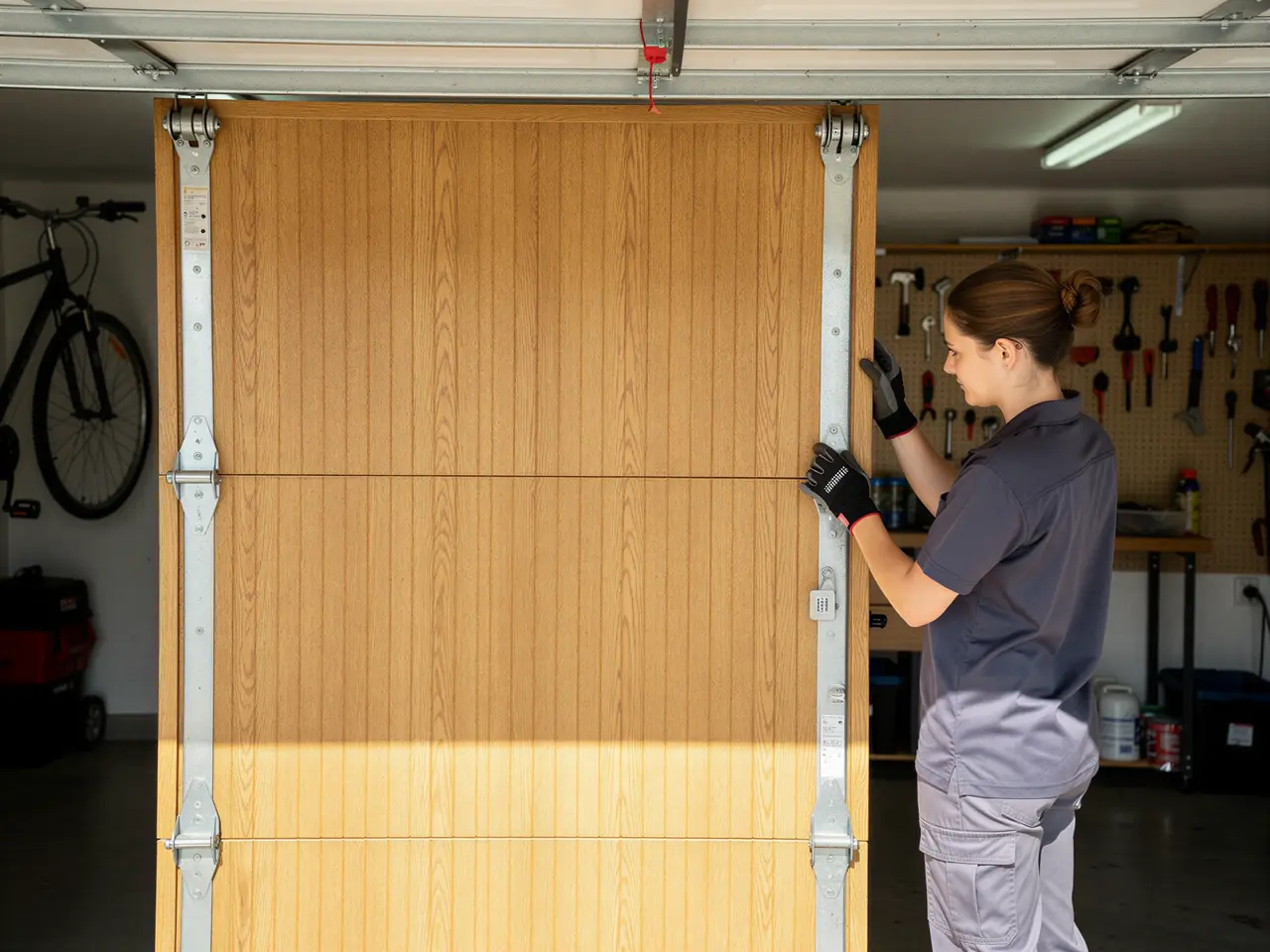
Most garages in Waller went up around 1971, a good decade and a half before the 1980s-90s stock that makes up a lot of the surrounding service area. That matters here because a door install isn't just measuring an opening and bolting on a new panel. A 1971 garage was built for whatever hardware was standard that year, and in a lot of cases that was a single door-wide track with an extension spring setup, not the torsion bar most people picture now. Swapping that out for a modern sectional door means new track, new drums or spring, sometimes new jamb brackets, because the old header wasn't framed for today's hardware. That's a lot of structural guesswork for someone working from a video. We're not going to tell you it can't be done at all - some owners handle panel swaps fine. But spring tension on an extension-spring system can put someone in the ER if the winding goes wrong, and on a 1971 opening you're often also dealing with wood jambs that have shifted over fifty years, which throws off square. If you want to do the demo yourself and have us handle the spring, track, and final balance, that's a reasonable split. If you want hands off the springs entirely, that's reasonable too.
What Can Go Wrong
Houses built in 1971 usually have garage openings a bit narrower than what builders frame today, and door headers sized for the lighter hardware of that era. When we install new, we often find the header isn't rated for a heavier insulated door without added blocking. We also see a lot of original jambs that have settled unevenly over fifty years, so the opening isn't square even if it looks fine from the driveway - that throws off weatherstrip seal and can bind a new door on one side. On the small end, old concrete slabs poured in the early 70s sometimes don't have a level threshold anymore, which means shimming the track base so the door doesn't rub or catch. None of this is unusual for a house this age; it's just work that has to happen before the new door goes up, not after. Skipping it gets you a door that looks installed but runs rough within a year. Climate is the other factor - this is a cold, moderate winter region, and an older opening with gaps around the jamb loses a lot more heat once insulation standards changed. A new door with a decent R-value only does its job if the frame around it seals, so we check that before quoting a straight panel swap.
Parts We Carry
For installs in this age bracket we stock standard torsion spring hardware sized for both single and double openings, galvanized track in the lengths that fit 1960s-80s framing without a lot of custom cutting, and jamb brackets built for retrofitting into older wood framing rather than newer steel-stud construction. We carry insulated steel sectional doors in widths that cover the typical openings from this build era, along with the heavier-gauge springs that a lot of these older headers need once you add insulation weight that wasn't part of the original load calculation. What we don't keep on the truck is anything custom-ordered - specialty wood doors, odd-width openings outside the common range, or glass-panel doors with long lead times. Those get special-ordered and we're upfront about the wait before you commit, because a four-to-six week backorder on a door you need now isn't a surprise anyone wants. For a straightforward replacement on a standard 1971-era opening, we're usually working from stock.
How Long You Are Without the Door
We run installs out of Puyallup, and Waller is close - about 4 miles out, so travel isn't the bottleneck on timing. The bottleneck is usually the prep work an older opening needs. A straight swap where the jamb is square and the header's already rated for the new door's weight is typically a same-day job: old door off, new track and spring set, new door up and balanced in one visit. Where we find the framing issues common to this build year - unsquare jambs, a header that needs blocking - that adds time, sometimes a return trip if lumber needs to be sourced or the fix is more than a quick shim. We'll tell you on the first look whether you're looking at a one-visit job or two, rather than promising same-day and then stretching it out once we're inside the opening.
Frequently asked questions
Why does the build year of my house matter for a new garage door?
Waller homes mostly date to 1971, which set the opening width, header strength, and spring type the garage was framed for. A modern insulated door weighs more than what was standard then, so the header and track often need updating alongside the door itself, not just a straight panel swap.
Do you keep a crew stationed in Waller?
No. We run installs out of our Puyallup shop, about 4 miles from Waller. There's no local branch here - the truck comes out for the job and we don't claim otherwise.
Can I keep my existing opener with a new door?
Sometimes. It depends on the opener's age and whether the new door's weight falls within its lift capacity. On a lot of 1971-era garages the opener was added later anyway, so we check the unit on site rather than assuming.
Will a new door actually cut my heating costs?
It can help, especially if your current door and jamb have gaps from decades of settling - this is a cold, moderate winter climate, so sealing matters. But the door only performs as well as the frame around it seals, which is why we check the jamb before quoting insulation specs.
Book garage door service in Puyallup
Call now or request a quote - tell us what the door is doing and where you are.