
Puyallup, WA · Garage Door Service
Why Puyallup Garage Doors Fail the Way They Do
A look at how Puyallup's 1980s-era housing stock and cold winters wear on garage door springs, tracks, and openers, and what that means for repair calls here.
- Repairs & new doors
- Springs & openers
- Serving 6 nearby communities
Where People Go Wrong
Most homeowners here treat a garage door like it's one thing, but it's really a dozen parts aging at different rates. Puyallup's housing stock runs 1938 to 2003 with a median build year of 1988, which means a big share of the doors we look at are original or near-original equipment on homes now pushing 35+ years old. The door panel might look fine while the torsion spring underneath it is on its last few hundred cycles, because springs are rated in cycles, not years, and nobody replaces one before it snaps.
The other mistake is assuming the opener and the door are the same job. On a lot of the 1980s and 90s builds spread across the 43 named areas in this service territory, the opener has been swapped once already but the original track and rollers never were. That mismatch is where a lot of the grinding, sticking, and off-track calls come from - new motor, old guts.
We're not going to tell you every door needs replacing. A spring swap and a track alignment often get another decade out of a door that's structurally sound. But if the door itself is from the 1988 median build era and has never been touched, replacement is usually the more honest answer than another patch repair.
What the Weather Here Does to It
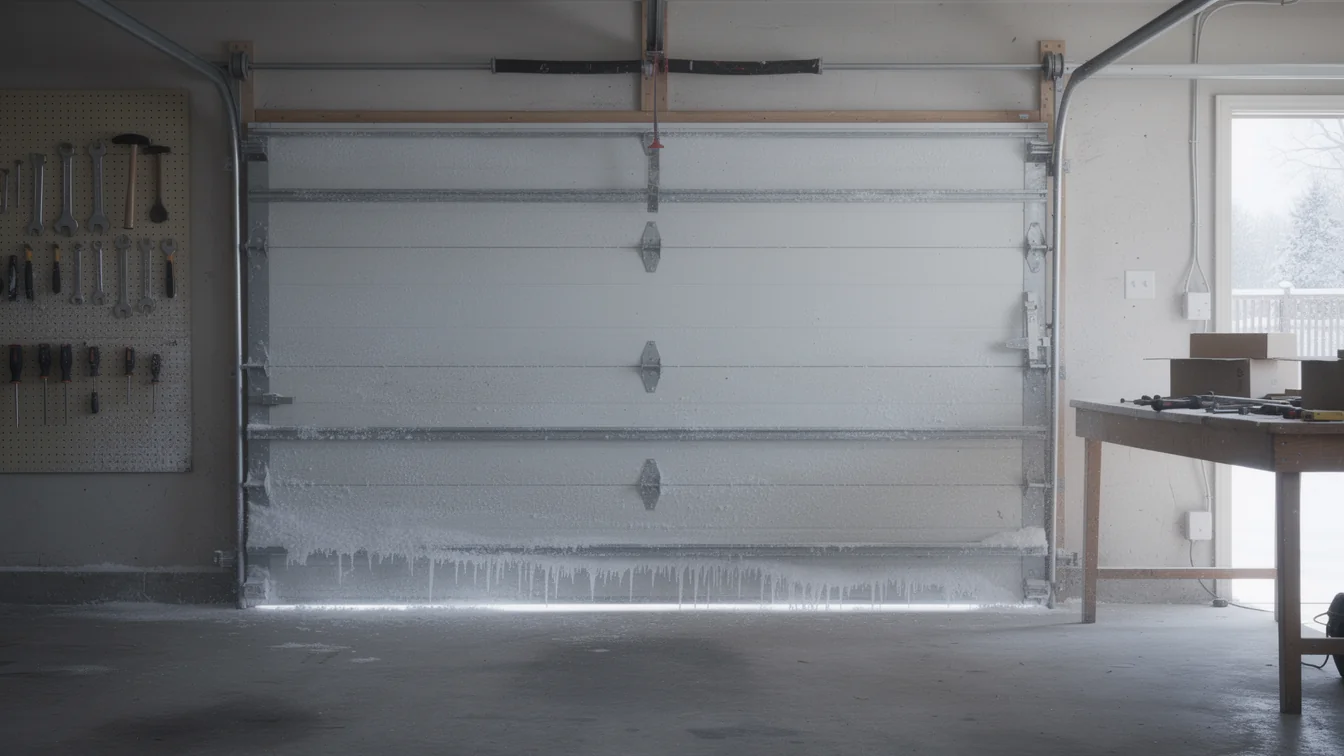
This is a cold moderate climate band, not the kind of extreme swing you'd get further inland, but cold enough that steel contracts, lubricant stiffens, and hardware installed in the 1980s and 90s starts showing its age faster than it would in a mild coastal town. On houses from that median 1988 build year, the galvanized hardware wasn't speced for 35+ years of this freeze-thaw cycling, and it shows up as rust at the roller brackets and hinges before it shows up anywhere else.
Cold also changes how a torsion spring behaves. Steel loses a bit of flex in low temperatures, so a spring that's already near the end of its rated cycle count is more likely to fail on a cold morning than a mild afternoon. That's not dramatic, it's just physics working against aging hardware.
One limitation worth saying plainly: we can't predict exactly when a given spring will go. Cycle counts and age put a door in a higher-risk window, but we don't do speculative spring swaps on a door that's still working fine. If it's running quiet and smooth, we'll tell you that instead of selling you a repair you don't need yet.
What Changes With the Season
As temperatures drop through the cold moderate months, the grease in an original 1980s or 90s opener chain or screw drive thickens, and that added resistance is what you hear as a new groan or hesitation at the top of travel. It's not usually the motor failing, it's old lubricant fighting cold steel. A fresh application of the right lubricant, not household oil, usually quiets it down.
Humidity and temperature swings also affect wood-trimmed doors and jambs common on houses from this build era. Panels can swell slightly in damp cold and bind against weatherstripping that was installed when the garage was built decades ago and never replaced. If a door that closed fine in summer suddenly needs a shove in winter, that's usually the jamb, not the opener.
Across the roughly 112,589 owner-occupied houses in this service area, the pattern repeats: calls climb in the cold stretch because hardware that's been quietly degrading all year finally gets pushed past its limit by the temperature drop, not because anything sudden happened.
What Is Going On
Put the pieces together and the picture for this area is straightforward. A median 1988 build year means a lot of original torsion springs and track hardware are well past comfortable service life. A cold moderate climate means that hardware fails a little sooner and a little more often in the cold months than it would somewhere milder. And a service area with 207,179 households spread across 43 named communities means the volume of aging 1980s-90s doors is large enough that this isn't a rare pattern, it's the normal call.
None of this means every door needs work right now. It means that if your door was installed with the house and hasn't had the spring or rollers touched since, you're closer to a failure than the smooth operation might suggest. We'd rather tell you that in a quick inspection than have you find out on a cold morning when the car's half in and half out.
Frequently asked questions
How do I know if my garage door spring is near the end of its life?
Age is the best clue we have without a cycle counter: if your house was built around the median 1988 date for this area and the spring has never been replaced, it's well past typical rated life. Listen for new grinding or a visible gap in the spring coil, and don't wait for it to snap.
Why does my door act up more in winter than summer?
Cold thickens lubricant and makes steel hardware stiffer, so openers and tracks that were already worn from decades of use show problems sooner in the cold moderate months here than they would in a mild season. It's usually old grease or aging rollers, not a sudden break.
Is it worth repairing an original door from a 1980s or 90s house?
Often yes, if the panels and track are straight - a spring and roller job can add years. But if the door is original to a house from the median 1988 build year and multiple parts are failing at once, replacement usually costs less over time than repeated patch repairs.
Related garage door services in Puyallup
More garage door guides
Book garage door service in Puyallup
Call now or request a quote - tell us what the door is doing and where you are.