
Puyallup, WA · Garage Door Service
Spring Repair for Puyallup-Area Garage Doors
Torsion and extension spring repair for Puyallup-area homes built mostly in the 1980s and 90s, where cold damp winters wear springs faster than the warranty label admits.
- Repairs & new doors
- Springs & openers
- Serving 6 nearby communities
Why This Fails Locally
Most of the housing stock across this service area went up between 1938 and 2003, with the bulk of it clustered in the 1980s and 90s. That matters for springs because a torsion spring is rated by cycle count, not by calendar years, and a 30-plus-year-old door has usually burned through its original spring's rated life more than once already - often with a cheaper replacement spring swapped in at some point by a previous owner or a handyman, undersized for the door's actual weight. Add the climate here: a cold, moderate band means steel contracts and expands through repeated freeze-thaw swings every winter, and that cycling fatigues the coil faster than it would in a mild, dry climate. Condensation inside an unheated garage also means more rust at the spring's wind cone and end bearings than you'd see in a dry inland town. None of this is dramatic - it's slow metal fatigue - but it's why a spring that looked fine in October can snap on a January morning with no warning. The fix isn't exotic. It's matching the new spring to the actual door weight and this area's duty cycle, not just grabbing whatever's closest in size.
What the Repair Takes
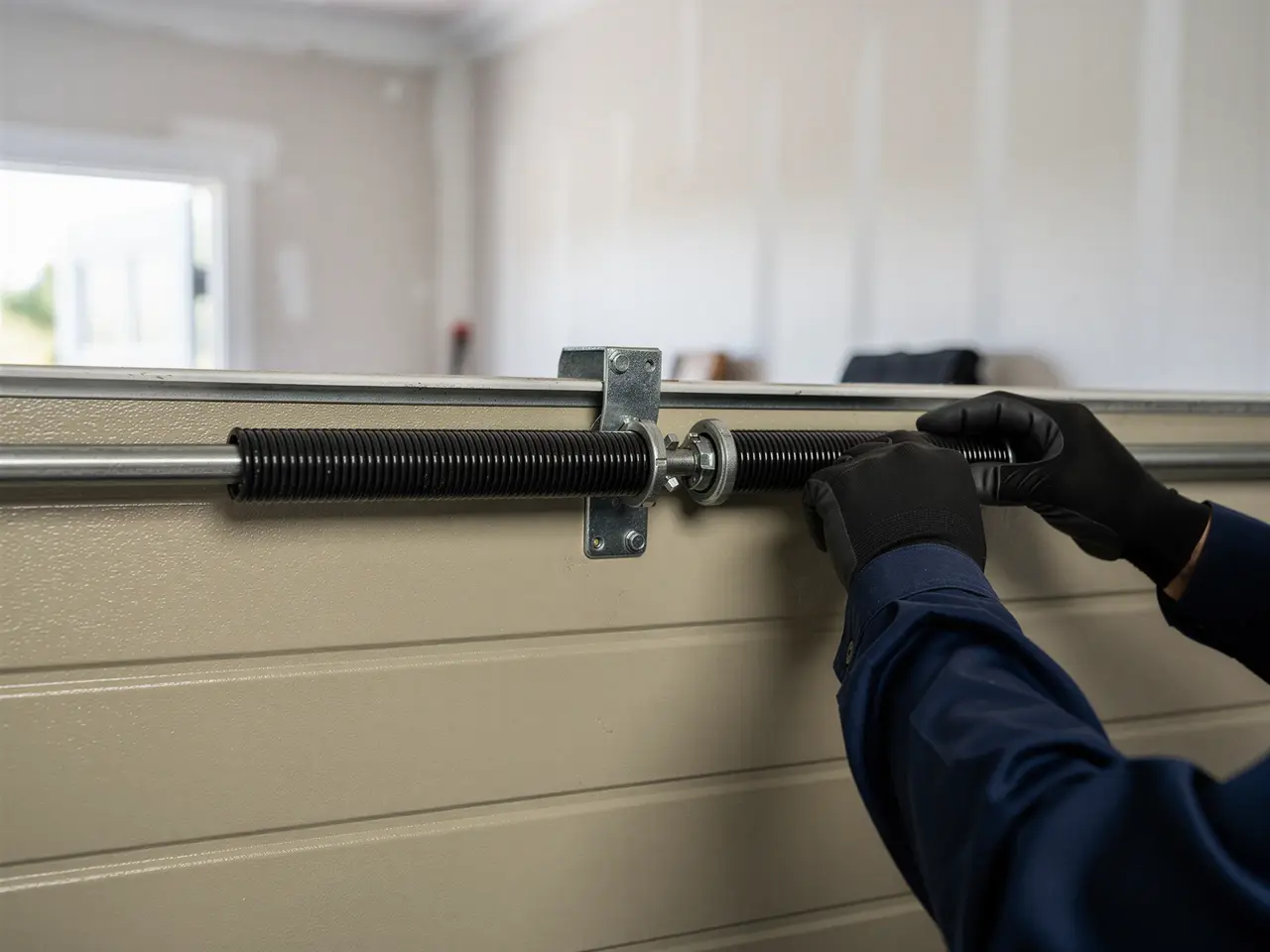
A torsion spring job means unwinding the old spring under tension, pulling the shaft if the bearings or cable drums are worn, and winding a new spring sized to the door's actual weight - not a generic size off a shelf. On a two-car door with two springs, both get replaced together even if only one broke, because the surviving spring is nearly always close behind on cycle life. Extension spring setups, more common on older garages in this service area given the 1938-2003 build range, get new safety cables run through the springs as part of the job - a code item a lot of original installs skipped. We check the drums, the bottom brackets, and the track alignment at the same time, since a spring failure under load can bend a track or crack a bottom bracket on the way down. Parts lead time is the one honest limit here: oversized commercial-grade springs or odd-length shafts for a nonstandard door sometimes have to be ordered, which can push a full fix out a few days. We'll get a temporary safety measure in place so the door isn't a hazard in the meantime.
How It Shows Up
The door feels heavier than it used to - you notice it lifting by hand before you ever notice a loud bang. Some owners hear a sharp crack from the garage, often in cold early morning hours when the steel is contracted and under more stress. After that, the opener strains, grinds, or reverses itself trying to lift a door with no spring assistance, which can burn out the opener's drive gear if it keeps trying. A visible gap in the coil, or one spring clearly sitting looser than its twin on a two-spring setup, means it's already gone or about to. None of these signs are unique to any one house style, but given how much of the stock here dates to the 1980s and 90s, a lot of these springs are reaching the end of their rated cycles around the same calendar window, which is why we see clusters of these calls through the colder months.
The DIY Question
A broken torsion spring is not a weekend fix, and we'll say that plainly: the spring is wound under enough tension to break bones or worse if the winding bars slip, and the tools to do it safely aren't things most people own or want to buy for a one-time job. Extension springs are lower tension and a more capable homeowner can sometimes handle a cable or pulley swap, but even there, a missing safety cable turns a minor failure into a swinging piece of steel. Where DIY makes sense is the easy stuff - lubricating hinges and rollers, tightening loose bolts, clearing track debris - routine upkeep that slows wear in a climate that's already hard on moving steel parts. Spring replacement itself is where we draw the line and recommend calling it in.
Frequently asked questions
How long does a torsion spring last on a garage door around Puyallup?
It's rated by cycles, not years, usually around 10,000. A typical household uses the door a few times a day, so in this climate's freeze-thaw cycling, most springs land somewhere between 7 and 12 years before fatigue takes over, sooner if the original spring was undersized for the door.
Why do both springs need replacing if only one broke?
On a two-spring door, both springs see the same cycle count and the same winters. If one has already failed, the other is close behind on fatigue life. Replacing just one usually means a second call within a year or two for the matching spring.
Can a broken spring damage anything else?
Yes. Once the spring lets go, the full weight of the door transfers to the opener and the cables. That can strip the opener's drive gear, snap a cable, or bend a track if the door drops unevenly. Getting it fixed promptly limits the damage to just the spring.
Is extension spring or torsion spring repair different?
Mechanically yes. Torsion springs sit on a shaft above the door and need winding bars under real tension to replace. Extension springs run along the horizontal tracks and are lower tension, but they need safety cables threaded through them, which a lot of older installs in this area never had.
Related services
By Neighborhood
Spring Repair across the Puyallup area
We also handle spring repair in these Puyallup-area suburbs.
Book garage door service in Puyallup
Call now or request a quote - tell us what the door is doing and where you are.