
Puyallup, WA · Garage Door Service
Safety Sensors and Why They Drift Out of Line
Puyallup homes built mostly between 1938 and 2003 have sensor brackets that move with the seasons. Here's why they drift and what actually fixes it.
- Repairs & new doors
- Springs & openers
- Serving 6 nearby communities
Where People Go Wrong
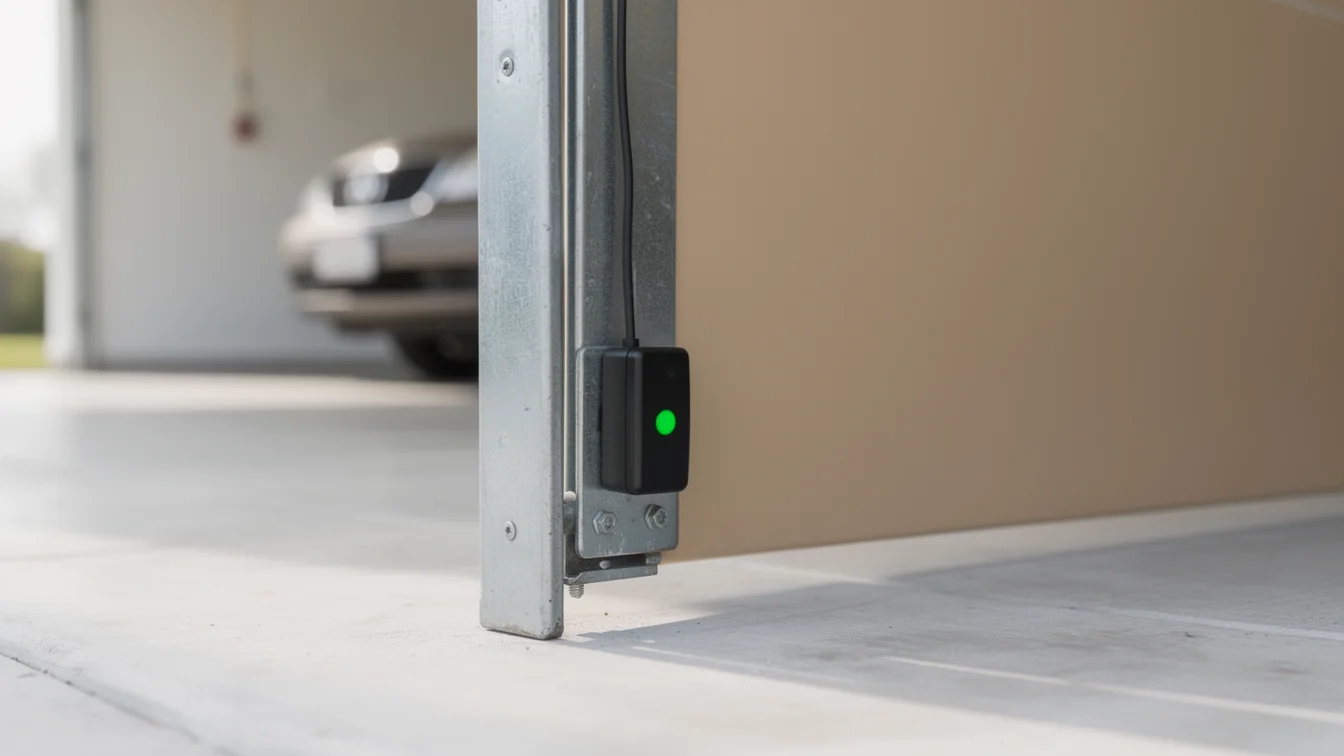
Most calls we get about a door that won't close start the same way: the owner wipes the sensor lenses, maybe kicks the bracket back into place by eye, and the door works again for a week before it stops closing again. That fix doesn't hold because it treats the symptom, not the bracket.
Houses in this area were built mostly between 1938 and 2003, with the typical build year landing around 1988. That matters here because a door that old has had three decades of someone leaning a bike against the track, bumping the sensor with a car bumper, or just the slab moving under it. The bracket holding the eye is thin steel, and once it's bent even a little, pointing it "close enough" by eye won't hold a true line for long.
The other mistake is assuming a blinking sensor light means a bad sensor. Nine times out of ten the sensor itself is fine. It's the bracket, the mounting screw, or the wire that's the problem, and no amount of lens-wiping touches any of those.
What the Weather Here Does to It
Puyallup sits in a cold-moderate climate band, not a dry one, and that distinction is the whole story with sensors. The slab under your tracks and sensor posts isn't static. It expands and contracts across the cold months, and that movement is enough, over a few winters, to tilt a sensor eye a half-inch off its line, which is more than enough to lose the signal.
Condensation is the other piece. On cold mornings the lens itself can fog just enough to scatter the infrared beam without blocking it outright, so the door hesitates or reverses for no obvious reason. People call that a "phantom stop" and start troubleshooting the opener logic board when the real cause is a few degrees of dew point sitting on a plastic lens.
We don't see the kind of baked, cracked, sun-brittled brackets you'd get in a hot dry climate. What we see instead is slow, repeated settling: screws backing out a sixteenth of a turn at a time, brackets nudged by frost heave at the slab edge, wiring insulation going stiff and pulling at the connection point during the coldest stretches.
What Changes With the Season
Spring and fall are when sensor calls spike here, and it's not a coincidence. Those are the seasons with the widest day-to-night temperature swing, which means the most expansion and contraction cycling through the slab, the track, and the bracket screws in a short window.
Winter brings a steadier kind of problem: the lens fogging we mentioned, plus stiff door springs that make the opener strain harder and transmit more vibration down into the track and sensor mounts with every cycle. Summer is usually the quiet season for sensors in this climate band, since there's less day-to-night swing to work the hardware loose.
If your door started refusing to close around the first cold snap or the first real spring warm-up, that timing isn't a coincidence. It's the bracket telling you it's moved.
What Is Going On
Given that most of the housing stock in this area dates to the 1980s and 90s, the sensor brackets we find are often the original push-in style from that era rather than the tool-free wing-nut mounts sold now. Those older clips don't hold alignment as well once the plastic ages, and re-aiming them is a temporary patch at best.
We'll check alignment, tighten or replace the bracket, and clear the wiring path before we touch the opener's settings, because in a door this old the opener logic is rarely the actual fault. A limitation worth being honest about: if the bracket mount itself has corroded or the wiring is brittle enough to crack when flexed, we'll tell you to replace that section rather than patch it, since a patched connection in this climate tends to fail again by the next cold snap. You can see more about the work we do at Puyallup Garage Door Pros.
Frequently asked questions
Why does my garage door sensor only act up in cold weather?
Condensation on the lens and slab movement from freeze-thaw cycling both peak in the cold months here. The lens fogs enough to scatter the beam, or the bracket shifts just enough to lose the line, and either one makes the door stop or reverse without warning.
My house was built in the late 80s. Is the original sensor bracket still on there?
Often, yes. A lot of homes in this area date to right around 1988, and we still find the original push-in sensor clips from that period on doors that have never had the opener replaced. Those clips lose their grip over time, which is usually the real cause of repeated misalignment.
Can I just re-aim the sensor myself?
You can, and it'll often work for a short while. If the bracket itself is bent or the mounting screw has backed out, re-aiming treats the symptom and the door will drift out of line again within a season, especially through a temperature swing.
Related garage door services in Puyallup
More garage door guides
Book garage door service in Puyallup
Call now or request a quote - tell us what the door is doing and where you are.