
Puyallup, WA · Garage Door Service
Buying a Replacement Door in Puyallup Means Matching It to the House You Actually Have
Puyallup's housing runs 1938 to 2003, and most doors from that span were built for a climate they're not holding up to anymore. Here's what to know before you replace yours.
- Repairs & new doors
- Springs & openers
- Serving 6 nearby communities
Where People Go Wrong
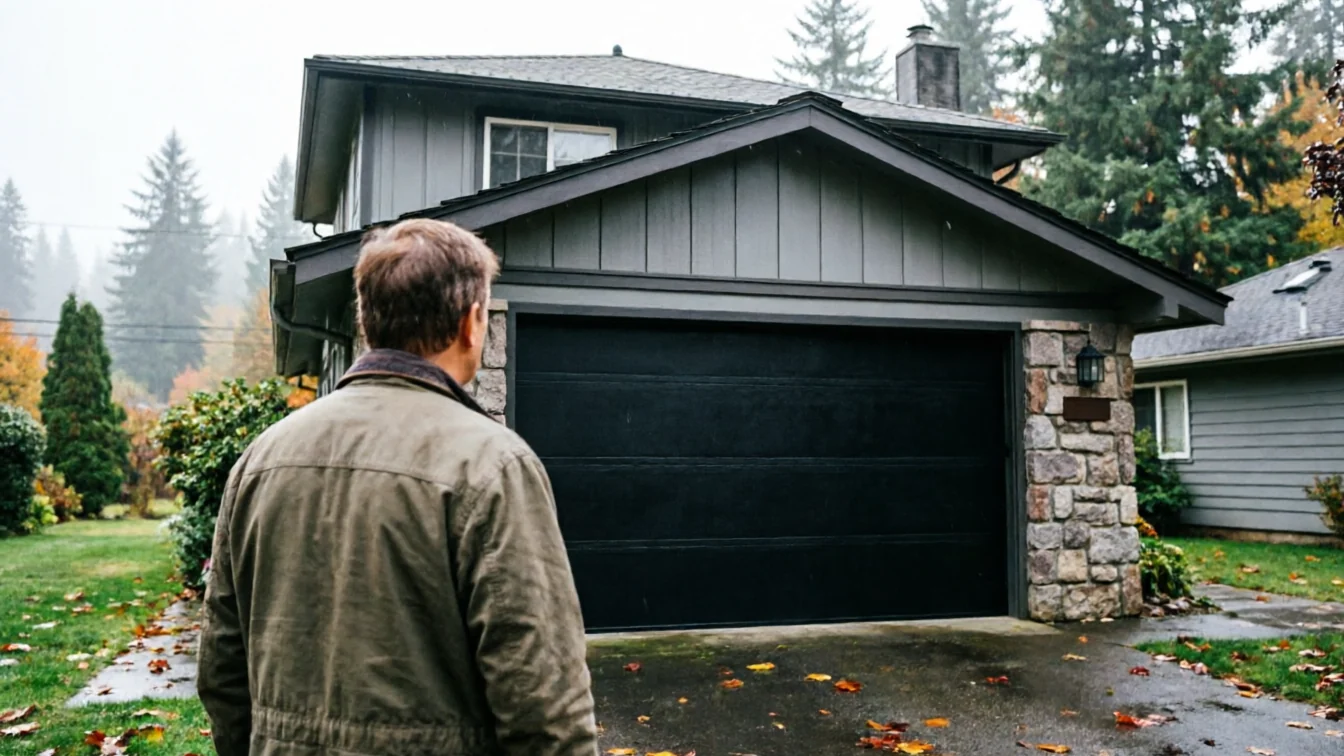
The mistake we see most is someone replacing a door with whatever the big box store has on the lot, without checking what the opening and the house actually call for. Puyallup housing was built mostly between 1938 and 1988, with the bulk of stock across the wider service area dating from the 1980s and 90s. That matters because a door built to fit a 1988 opening, with 1988 track spacing and a 1988 header, doesn't always drop into a frame that's shifted a little over three decades. Homeowners order online, get a door that's close enough, and then pay a second truck roll to fix a gap or a track that won't line up.
The other common error is buying on price alone. With median household income in the service area at $107,781, a lot of owners here can afford a heavier, better-insulated door and skip it anyway, then replace the cheap one again in eight years. A double-layer steel door with a real thermal break costs more up front. It also doesn't warp the first cold snap. We'd rather talk you through the actual opening and what your house was built with than sell you a box off a shelf.
One honest limitation: we don't carry every custom size in stock. If your opening is non-standard, expect a lead time, not a same-day swap.
What the Weather Here Does to It
The service area sits in a cold-moderate climate band, which doesn't mean brutal, but it means real freeze-thaw cycling on anything with moving metal parts. A garage door track or hinge set made for a mild climate corrodes and binds here in a way it wouldn't somewhere warmer, and a hollow steel panel without a thermal break will sweat and rust from the inside before the outside paint even shows wear.
This is the part people skip when they buy on price. A door rated for a mild climate zone is the wrong spec for a Puyallup garage, even if it's cheaper and even if it looks identical on the showroom floor. The panels that hold up longest here are insulated, with sealed bottom brackets and galvanized hardware rated for repeated freeze-thaw exposure, not just cold snaps once a winter.
We're not selling fear here. A steel door with a basic finish will still last years. But if you're paying once for a replacement, the climate band this area sits in is the reason to spend the extra on insulation and hardware rated for cycling, not for looks.
What Changes With the Season
A door that worked fine in August can bind, drag, or refuse to seat correctly by January, and it's rarely the opener. Cold tightens steel, stiffens lubricant, and shrinks seals, and a door bought without that in mind will show it every winter for the life of the door, not just the first one.
Across the 207,179 households and 112,589 owner-occupied houses in the service area, we see this same seasonal pattern on doors from every era of the 1938-2003 building stock, not just the oldest ones. A door from the 1990s with the original weatherstripping often performs worse in a cold stretch than a properly sealed new door, simply because 30-year-old vinyl has lost its give. If you're replacing a door anyway, this is the detail that decides whether you're happy with it come winter, not just the day it's installed.
Spring and fall are the forgiving seasons here, which is also when a bad install hides its problems. A door that seats and seals fine in October can show daylight at the bottom corners by February. That's not a defect - it's a seal spec that didn't account for the swing.
What Is Going On
Put plainly: this is an area with an older housing base, a cold-moderate climate, and household incomes that support paying for the right door instead of the cheapest one. Those three facts together are the whole case for buying carefully instead of buying fast.
A lot of the openings we measure in Puyallup and the surrounding areas - Sumner, Edgewood, Summit, Fife, and the rest within a few miles - were framed decades before today's insulated steel doors existed, so the fit isn't always a drop-in. That's the job: measuring the actual opening, matching it to the house's age and the climate it sits in, and speccing hardware that won't need replacing again in eight years because it wasn't rated for the cycling this area sees every winter.
If your door is original to a house from the 1938-2003 build range, replacement is usually the right call over another repair, since parts for that era's hardware are getting harder to source. We'll tell you straight when a repair still makes sense instead.
Frequently asked questions
How do I know if my garage door is original to the house?
If your house falls in the 1938-2003 range that covers most of the Puyallup area's housing stock, check the spring and hinge hardware for a manufacture date stamp, or look at the panel seams - older doors often have visibly thicker steel and fewer insulation layers than anything made in the last decade. We can check this on a visit.
Is a cheaper door really a problem in this climate?
It can be. The service area sits in a cold-moderate band with real freeze-thaw cycling, and a door without a thermal break or sealed hardware will bind, sweat, and corrode faster here than in a milder zone. It'll still work for a while - it just won't last as long as a door spec'd for the cycling this area actually sees.
Does my opening size match what's sold today?
Not always. Openings framed decades ago don't all match current standard door sizes exactly, especially on houses from the earlier end of the 1938-2003 range. We measure before ordering so you're not stuck with a door that's close but doesn't seal right at the edges.
Related garage door services in Puyallup
More garage door guides
Book garage door service in Puyallup
Call now or request a quote - tell us what the door is doing and where you are.