
Puyallup, WA · Garage Door Service
What Puyallup's Weather and Older Housing Stock Do to a Garage Door
Puyallup homes built mostly in the 1980s and 90s meet a cold, moderate climate that wears springs, tracks, and weather seals faster than most owners expect.
- Repairs & new doors
- Springs & openers
- Serving 6 nearby communities
Where People Go Wrong
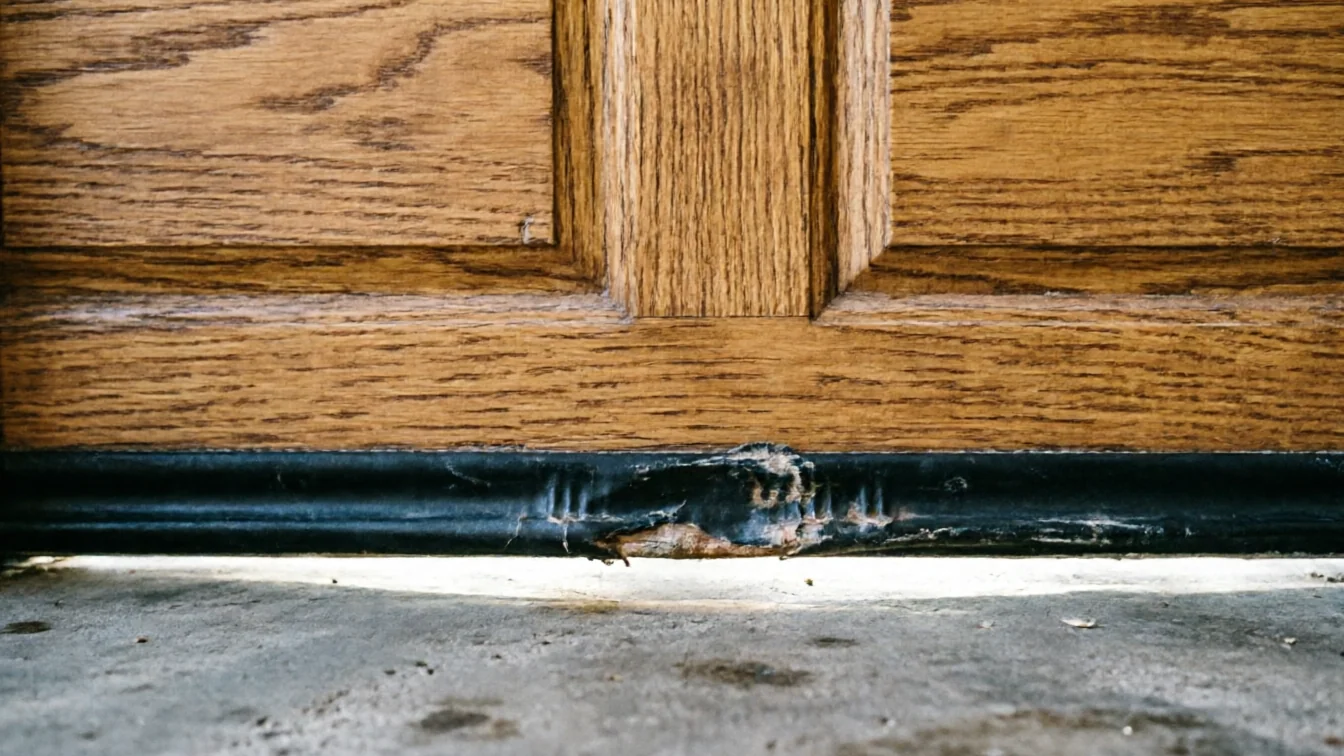
The mistake we see most often has nothing to do with the door itself and everything to do with when the house was built. Across this service area, homes went up mostly between 1938 and 2003, with the median sitting around 1988. That means a huge share of the openers, tracks, and springs people are dealing with today are original or close to it - builder-grade hardware from a specific twenty-year window, not whatever's on the shelf at a hardware store now. Owners treat a sticking track or a slow opener as a one-off problem instead of what it usually is: a part reaching the end of a run that started in the Reagan or Clinton years. Another common error is spraying the wrong lubricant on tracks instead of the springs and hinges, which does nothing for the actual wear points and can attract dust that jams a roller. And in a lot of the 1980s-era garages here, the weather seals and drafts at the bottom panel get ignored until a door won't seat flush anymore, at which point it's not a five-minute fix. The hardware doesn't fail all at once. It fails the way it aged - slowly, in a pattern tied to the decade it went in.
What the Weather Here Does to It
This area sits in a cold, moderate climate band, and that's a harder environment on steel hardware than people assume. Torsion springs lose a little tension every time they go through a cold snap, and galvanized coatings on older tracks - the kind found on houses from the 1980s and 90s that make up most of this stock - start pitting once moisture gets into a scratch in the coating. Wood trim on original panels from that era swells slightly in wet months and shrinks back in dry ones, which is why a door that closed flush in July can rub or bind in January. None of this is dramatic. It's cumulative. A spring rated for a certain number of cycles gets there faster in a climate that puts metal through repeated contraction and expansion than it would somewhere mild and dry year-round. We don't see much in the way of sudden storm damage here - this isn't a hail or wind market - but we see a steady rate of rust-seized rollers and slow-weeping bottom seals that trace straight back to the cold-moderate pattern this area sits in.
What Changes With the Season
Winter is when the cold tightens steel cable and springs just enough that a door which was fine in October starts groaning in December - the tension has shifted even if nothing's visibly broken. That's also when a weak opener motor shows its age, because cold grease inside the unit thickens and makes the chain or belt work harder than it should. Spring brings the thaw, and with it, moisture working into any gap in a weather seal that went unnoticed all winter; this is the point where bottom seals that have been quietly failing since fall finally let water track in. Summer is the easy season here - it's when panels and hardware are closest to their resting dimensions, which makes it the best time to actually true up a track or replace a seal rather than fight the metal while it's contracted or swollen. By fall, people start noticing noise again as temperatures drop, and the cycle repeats. None of these are separate problems. They're the same cold-moderate pattern showing up differently depending on which part of the year you catch it in.
What Is Going On
Put together, the housing age and the climate band explain almost everything we run into on service calls in this area. A door installed any time in that 1938-2003 window, with most of the stock clustered in the 80s and 90s, is working with original-spec hardware that was never built to run indefinitely through a cold-moderate freeze-thaw cycle. With 207,179 households and 112,589 owner-occupied houses across the communities we work in - places like Summit, Edgewood, Sumner, and Fife within a few miles, and Bonney Lake, Orting, and Graham a bit further out - a lot of these doors share the same builder-era spring and the same seasonal wear pattern, just at slightly different points in the cycle. Median household income here runs $107,781, which means most owners can choose replacement over a patch job when a door's past the point of a reasonable repair - and that's an honest call we'll make for you rather than stretch out a fix that won't hold. What we won't do is promise a same-day part for an original single-wall steel door from the older end of that build range; those parts aren't something every supplier stocks, and sometimes the right answer is a new door, not a repaired one.
Frequently asked questions
Why does my garage door get noisy every winter?
Cold temperatures tighten steel springs and cables and thicken the grease in older opener motors, which is why doors that run fine in summer start groaning or straining once the cold-moderate winter sets in. It's not usually a sign of sudden failure - it's the same hardware reacting to the season, and it's worth having the tension checked before it gets worse.
Is my garage door too old to repair?
It depends on when your house was built. A lot of homes in this area date from 1938 to 2003, with most clustered in the 1980s and 90s, and parts for the oldest single-wall steel doors from that range can be hard to source. If yours falls into that group, replacement is often the more honest answer than a repair that won't hold.
Why does water get in around the bottom of my door?
Weather seals wear out slowly, and in a cold-moderate climate they often fail quietly through winter before showing up as a leak once the spring thaw brings more moisture. Checking the bottom seal before winter, rather than after you notice water, is the cheaper fix.
Related garage door services in Puyallup
More garage door guides
Book garage door service in Puyallup
Call now or request a quote - tell us what the door is doing and where you are.