
Puyallup, WA · Garage Door Service
Is Your Older Puyallup Garage Door Worth Fixing
Puyallup homes mostly date 1980s-90s construction. Here's how that age and the area's cold damp winters decide whether your door is worth repairing or replacing.
- Repairs & new doors
- Springs & openers
- Serving 6 nearby communities
Where People Go Wrong
The mistake we see most in Puyallup is treating every garage door the same way, no matter how old the house is. Housing across this service area was mostly built between 1938 and 2003, with the median landing around 1988, and most of the 43 named areas we cover are dominated by that 1980s-90s stock. A door installed when the house went up is now pushing 35 to 45 years old, and a lot of owners either replace a door that still has life left, or keep pouring money into one that's past the point of return.
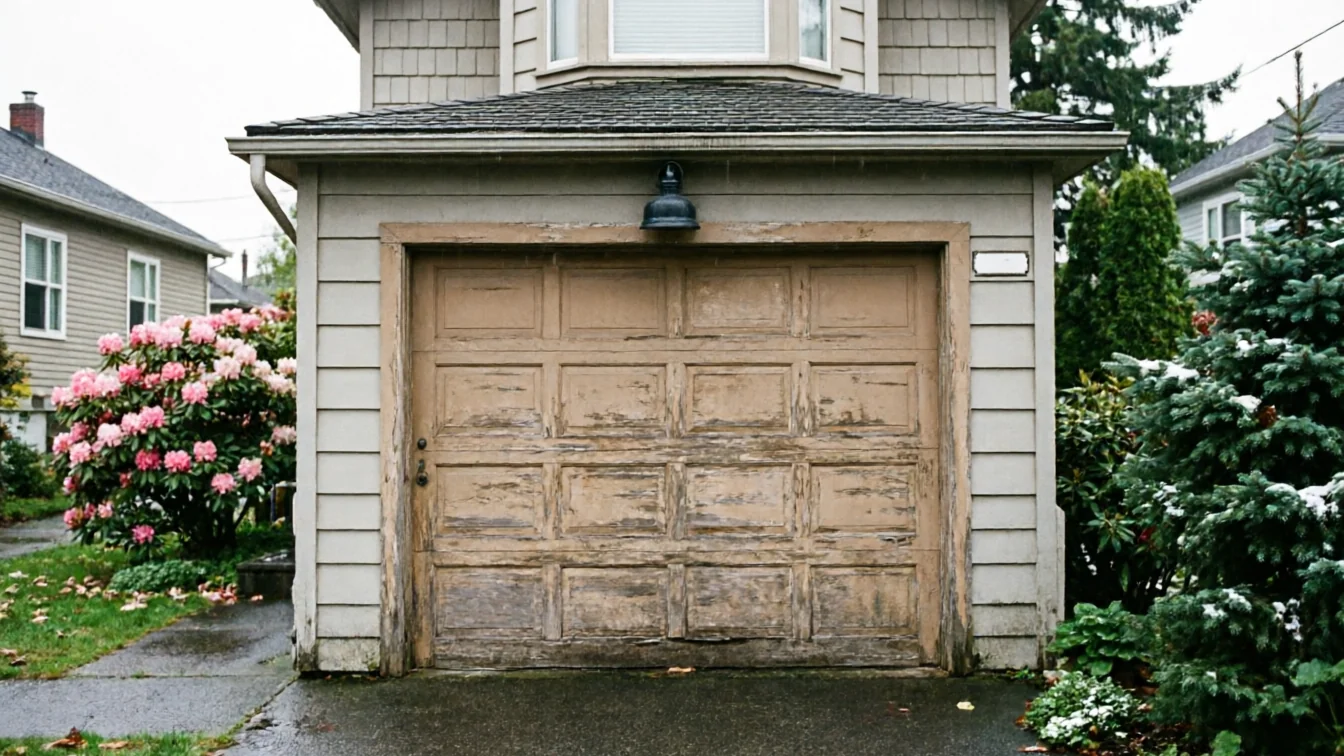
The real question isn't age alone, it's what's failing. A torsion spring, a set of rollers, even a bent track section - those are wear parts on any door and replacing them on an otherwise sound panel set is usually worth it. What isn't worth it is reskinning rot out of a wood-composite panel from that era, or chasing opener electronics that were never built to talk to a phone app. If the panels are original to a late-80s build and the bottom section has been sitting in standing water during wet months, you're not fixing a door anymore, you're renting time from it.
We'll tell you straight when a repair is a stopgap. That's not us trying to upsell a new door - it's us not wanting to take your money twice.
What the Weather Here Does to It
This area sits in a cold-moderate climate band, which means the door spends a good part of the year dealing with damp cold rather than dry freeze-thaw cycles like you'd see further inland. That matters for a door built in the 1980s or 90s, because galvanized hardware from that era wasn't always coated the way it is now, and decades of damp cold work on exposed springs and end bearing plates the same way it works on an old gate hinge - slow, steady corrosion rather than a sudden snap.
On a 1988-vintage door, that usually shows up as a spring that still functions but has lost consistent tension, or a bottom bracket with surface rust that's started eating into the metal. Wood composite panels common in that building period absorb moisture at the bottom corners first, and once that swelling starts, painting over it doesn't stop it.
We're not going to tell you cold-moderate winters here are some kind of extreme event - they're not. But steady damp over 35+ years does more to an original door than any one storm would, and that's the distinction that decides repair versus replace.
What Changes With the Season
On a house built in the median year for this area, 1988, the door's weatherstripping and bottom seal have usually been replaced more than once by now, which is fine and expected. What's worth watching each season is whether the track alignment has shifted, since older track hardware from 80s and 90s construction was often set with less adjustment range than what gets installed today.
In the wetter months, that misalignment shows up fastest: a door that rolled smooth in August starts binding or dropping unevenly in the cold damp stretch of the year, because the wood framing around the track has swollen slightly. That's a repair worth making on an otherwise sound 1980s-90s door - track adjustment and hardware tightening are cheap compared to the door itself.
What's not worth chasing every season is an opener from that same era that's started skipping signals or reversing for no reason. If the door itself is original to a house built in that 1938-2003 range, and the opener is original too, you're often better putting that repair money toward a new opener rather than keeps re-soldering an old one.
What Is Going On
Across the 112,589 owner-occupied houses in this service area, a big share were built in that same 1980s-90s window, and median household income here runs around $107,781, which is enough to replace a door outright but also enough that a lot of owners choose to repair first and replace later. Both are reasonable calls - the question is just which one actually saves money on your specific door.
If you're within the Puyallup area, including closer-in spots like Summit, Edgewood, Waller, or Sumner, the housing age pattern is similar enough that the same rule applies: original hardware on a house from that build era is worth inspecting before you decide anything. A spring job or roller replacement on a structurally sound door is money well spent. A full panel rebuild on a door that's already rusted through at the bottom corners usually isn't.
We don't stock every part for every decade of door, and lead time on some older hardware can run longer than people expect. That's the honest limit here - sometimes the repair is right, but the part isn't sitting on the truck.
Frequently asked questions
Is it worth fixing a garage door from the 1980s or 90s?
Often yes, if the problem is a spring, roller, or track issue and the panels themselves are still solid. Hardware from that era wears steadily in our cold-moderate climate rather than failing all at once, so a targeted repair usually extends the door for years without a full replacement.
How do I know if my door is too far gone to repair?
Look at the bottom panel corners and the end brackets. If you see rust eating into the metal or swollen, soft wood composite, that's structural, not cosmetic, and repair won't hold. A tensioned spring that's just lost strength, on the other hand, is a straightforward fix.
Does Puyallup's weather actually affect garage doors that much?
The cold-moderate, damp conditions here work slowly on exposed hardware over decades rather than causing sudden damage. A door built in the median year for this area, 1988, has had 35-plus years of that steady exposure, which is usually the real reason an original door starts failing, not any single season.
Related garage door services in Puyallup
More garage door guides
Book garage door service in Puyallup
Call now or request a quote - tell us what the door is doing and where you are.