
Puyallup, WA · Garage Door Service
Why Your Garage Door Jumps the Track in Puyallup
Puyallup homes built mostly in the 1980s and 90s come with track hardware that wasn't made for decades of wet winters. Here's where that hardware actually fails.
- Repairs & new doors
- Springs & openers
- Serving 6 nearby communities
Where People Go Wrong
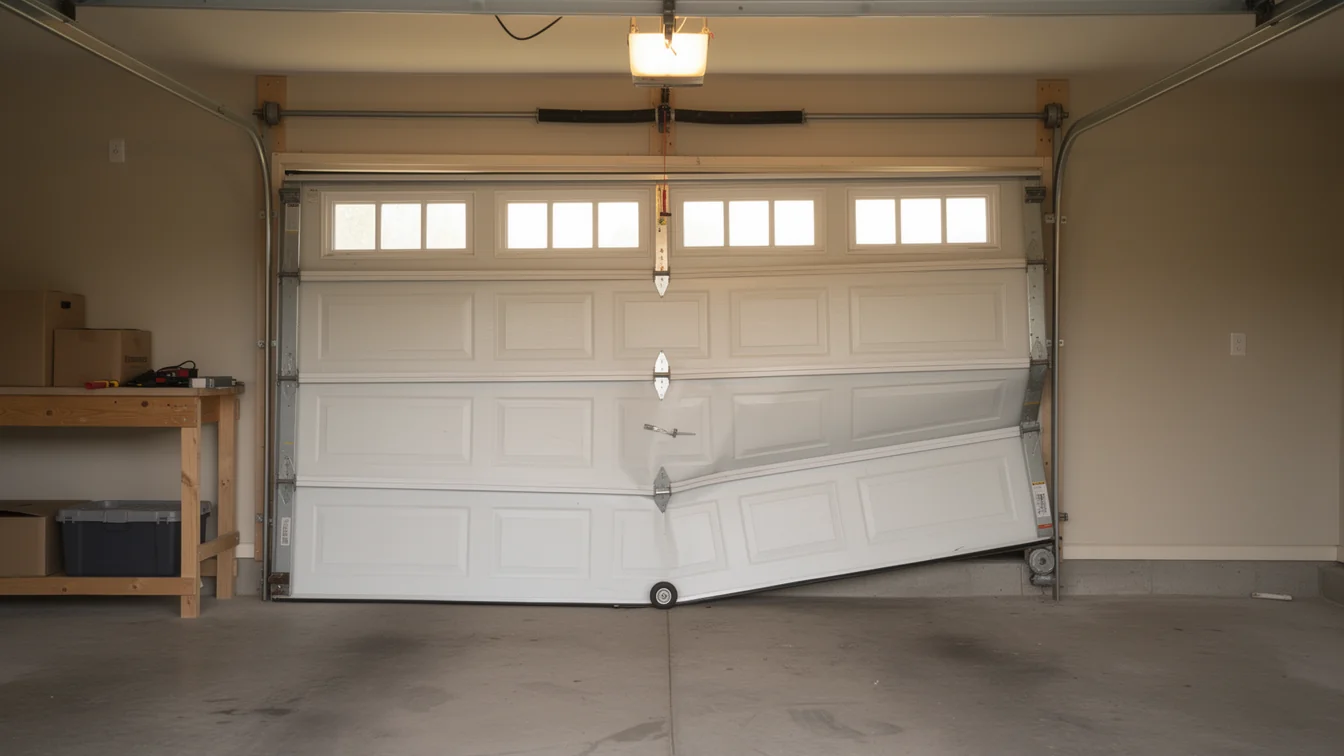
Most people assume a door off its track is a dented panel problem. It almost never is. On a Puyallup house, the track itself is usually fine. What fails first is the stuff holding it in alignment: the roller brackets, the lag screws into jamb wood that's been swelling and drying every year since the place was built, and the horizontal track hangers bolted to rafters that were framed for a door half the weight of what's hanging on them now if the opener was ever upgraded.
With housing in this area running from 1938 up through 2003, and the bulk of it dated to the 1980s and 90s, you get two different failure patterns depending on which decade built the house. The older end of that range has track hardware that was never rated for the heavier insulated doors people install now. The newer end, closer to the 1988 median, usually has the original steel rollers still in it - thirty-plus years of use on hardware nobody budgeted to replace. Either way, the bracket loosens a quarter inch at a time, nobody notices, and one cold morning the door binds and pops the roller clean out of the track.
We don't chase the symptom. We check the bracket bolts and the jamb condition before anything else, because tightening a bracket costs a fraction of what replacing a bent track does.
What the Weather Here Does to It
Puyallup sits in a cold-moderate climate band, which in practice means repeated freeze-thaw cycling rather than one hard freeze that stays put. That cycling is what does the damage, not any single cold snap. Wood jambs swell when they're wet, shrink a little when they dry, and every cycle works the lag screws holding your track bracket a hair looser. On a house from the 1980s or 90s stock that makes up most of this area, that's three or four decades of cycling on hardware installed once and never revisited.
Moisture also gets into the track channel itself. A track that's slightly out of plumb collects water at the low point, and over enough winters that water pits the steel where the roller rides. A pitted track doesn't bend the roller off course all at once - it does it a few degrees at a time until one day the door catches hard enough to pop a cable or jump the rail entirely.
This is a maintenance item, not a design flaw. A track bolted and shimmed correctly, and checked every year or two, holds up fine in this climate. One that's never been looked at since installation is the one that ends up on our call list.
What Changes With the Season
The pattern we see shifts through the year. Coming out of the wet months, brackets that loosened over winter show up as doors that rattle or lean slightly in the opening - not broken yet, but moving. That's the window where a tightening visit is cheap and a track replacement isn't needed.
Later in the year, once things dry out, the wood jamb shrinks back and the same bracket that was loose from swelling can now be loose from shrinkage pulling the opposite direction. It's the same screw hole working in two directions across a year, and in a house built decades ago that hole has had a lot of years to wear oversized.
We don't push a seasonal service plan on people, because for a lot of these doors a five-minute bracket check once a year catches the problem before it becomes a track job. If your door is still running quiet and straight, you don't need us out here just to look at it.
What Is Going On
If your door has actually left the track - roller hanging loose, door cocked in the opening, cable maybe off the drum - stop opening and closing it. Forcing a motorized door against a bent track usually bends it further and can snap a cable under tension, which is a different and more dangerous repair.
Here's the honest limit: if the track is bent rather than just knocked loose, we don't try to hammer it straight. Bent steel track work-hardens and fails again within months even if it looks fine right after. On a door that age, replacing that section of track costs less over time than a repeat service call. We'll tell you straight which one you're looking at before we quote anything.
Frequently asked questions
Why did my garage door suddenly come off the track with no warning?
It wasn't sudden. A bracket or lag screw loosened gradually, likely from years of the jamb swelling and drying with the seasons here, until the roller finally had enough slack to jump the rail. The warning signs - a slight lean or rattle - were probably there for months before the day it let go.
Can I just push the door back onto the track myself?
If the track is only knocked loose, sometimes. If it's bent, pushing it back will look like it worked and then fail again within weeks, and you risk a cable snapping under tension while you're standing near it. Worth having it checked rather than guessed at.
My house was built in the 1980s - is the hardware original?
A lot of houses from that era in this area still have their original steel rollers and track brackets. That's thirty-plus years of freeze-thaw cycling on hardware that was never meant to be permanent. It's worth a bracket check even if the door seems to run fine.
Does the wet winter weather really affect the track itself, not just the opener?
Yes. Water sitting in a track channel that's slightly out of plumb pits the steel over repeated winters, and a pitted track throws the roller off line a little at a time. It's a slower failure than most people expect, which is why it goes unnoticed until the door jumps.
Related garage door services in Puyallup
More garage door guides
Book garage door service in Puyallup
Call now or request a quote - tell us what the door is doing and where you are.