
Puyallup, WA · Garage Door Service
Roller Replacement for Bonney Lake's Newer Housing Stock
Bonney Lake homes mostly date to around 2001, newer than the Puyallup area's overall 1988 median. That gap changes which rollers fail first and when to swap them.
- Repairs & new doors
- Springs & openers
- Serving 6 nearby communities
What the Repair Takes
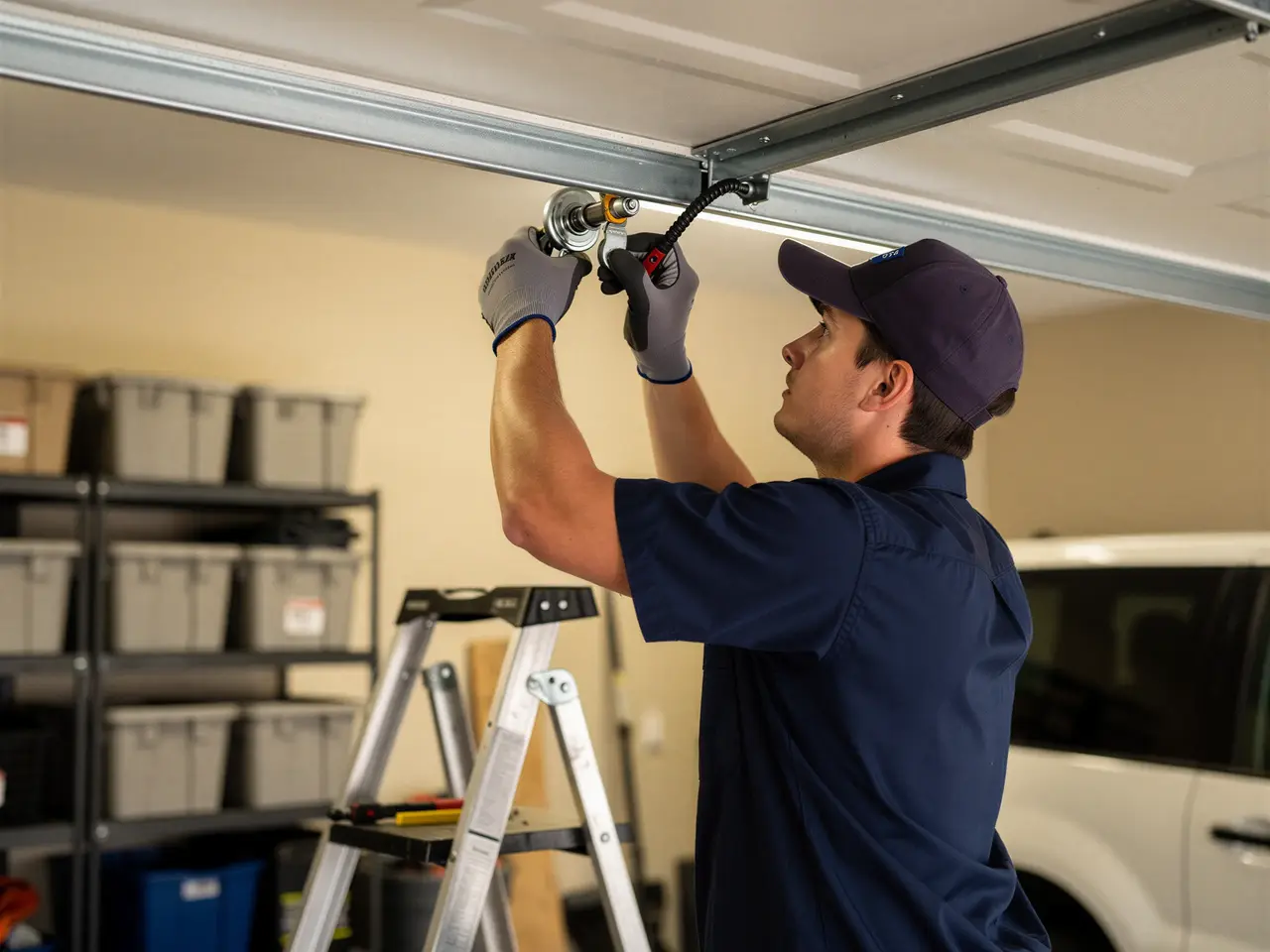
Bonney Lake sits about 6 miles from our Puyallup shop, and the drive matters less than the build date once we're on site. Most houses here went up around 2001, noticeably newer than the median across our whole service area, which runs closer to 1988. That means the original rollers on a lot of Bonney Lake doors are factory nylon on steel stems, not the older all-steel rollers you find on 1970s and 80s stock elsewhere in the area. Swapping a full set of ten rollers on a standard double door takes under an hour once we're set up: unclip the old roller, pull the stem from the hinge, seat the new one, work down the track. We check the track alignment at the same time, because a roller that's been grinding against a bent section will wear again fast no matter how good the new part is. If the track itself is bowed or the hinges are cracked, we handle that in the same visit rather than send you a second bill later for something we could see the first time.
What Can Go Wrong
The newer doors common in Bonney Lake tend to fail differently than older ones. Nylon rollers on 2000s-era hardware usually wear quietly, the roller bearing seizes up inside the sleeve and the wheel stops spinning even though it still rolls, so it drags and chews a flat spot into itself. You hear a rhythmic thump instead of a smooth roll. On older steel-roller doors elsewhere in our service area, the failure is louder and more sudden, metal-on-metal screech as the roller frame cracks. Cold-weather stiffening is the other factor worth knowing. Our climate band here runs cold-moderate, meaning winter mornings can gum up grease on an opener that hasn't been serviced, and a roller already worn thin will catch harder on that first cold-morning cycle than it would in July. We've seen a handful of top-section rollers go in a single season once the track develops even a slight lean, since that's the roller doing the most work on every cycle.
The DIY Question
Rollers are one of the few garage door parts a careful homeowner can look at themselves, even if we'd rather do the swap. Pop the door halfway open, pull the manual release, and look at the rollers near eye level: cracked wheel, flat spot, or a stem that wiggles loose in the hinge all mean it's time. What you shouldn't do yourself is touch anything on the bottom bracket of a door under spring tension, or try to pull a roller out of the bottom section while the cables are still under load. That's where people get hurt. If you're only replacing one or two rollers because the rest look fine, that's a reasonable call on a door from the 2000s where the hardware is still in good shape. If the whole set is original and the door itself is past 20 years old, replacing just the rollers and leaving worn hinges or a tired opener in place is a patch, not a fix.
Parts We Carry
We stock sealed-bearing nylon rollers in the standard stem lengths used on residential doors, which covers the great majority of what we see on Bonney Lake's newer housing stock. We also carry steel rollers for the occasional older door that's still running original hardware. What we don't keep on the truck is every specialty roller for commercial or oversized doors, those get ordered once we've seen the door and confirmed the stem length and wheel diameter. If your door needs a part outside our standard stock, we'll tell you that on the visit rather than guess and come back twice. Full roller sets run in pairs by position, top and bottom rollers take more load and wear faster than the ones in the middle of the track, so we replace by wear pattern, not by blanket rule, even when a customer asks for a full set regardless.
Why This Fails Locally
The short version: Bonney Lake's housing is younger than the area median, which means most of what we replace here is worn nylon, not cracked steel. That's a cleaner, faster job, but it also means homeowners sometimes wait too long because a worn nylon roller doesn't scream the way a failing steel one does, it just gets slower and quieter and jams occasionally, until it doesn't move at all. With median household income here running higher than the broader service area and a smaller number of households overall, around 7,655, we see fewer of these jobs out of Bonney Lake than from denser parts of the service area, but the fix itself doesn't change: catch the thump before it becomes a stuck door.
Frequently asked questions
How often do garage door rollers need replacing in Bonney Lake?
It depends more on cycle count than age, but since most Bonney Lake homes have doors from around 2001, we're mostly replacing original nylon rollers now reaching 20+ years of use. A grinding or thumping sound on the way up is the clearest sign it's time, regardless of exact age.
Do you have a shop in Bonney Lake?
No, we run out of Puyallup and drive to Bonney Lake, about 6 miles away, for every job. We don't keep a branch location there, so all scheduling and dispatch happens from our Puyallup base.
Can I replace just the worn rollers instead of the whole set?
Yes, and on newer doors common to Bonney Lake that's often the right call since the rest of the hardware is usually still in good shape. We check each roller individually rather than replacing a full set by default.
Will cold weather make a worn roller fail faster?
It can. Our climate band here is cold-moderate, and a roller that's already developed a flat spot or a stiff bearing will catch harder on a cold morning than it would in warmer weather, sometimes accelerating a failure that was already coming.
More garage door services in Bonney Lake
Book garage door service in Puyallup
Call now or request a quote - tell us what the door is doing and where you are.